
Pool tile installation is the process of applying specialized tiles to selected areas of a swimming pool, most commonly along the waterline, steps, benches, and decorative features. These tiles serve both a functional and visual purpose. They protect pool surfaces from constant water exposure while adding color, texture, and style to the pool design.
Unlike standard indoor tiles, pool tiles are designed to withstand prolonged contact with water, pool chemicals, sunlight, and temperature changes. Proper installation is essential, as poor workmanship can lead to cracking, loose tiles, or water damage over time.
Why Pool Tile Installation Matters
The waterline area of a pool is where oils, sunscreen residue, and mineral deposits tend to build up. Tiles create a smooth, non porous surface that is easier to clean and more resistant to staining compared to plaster or concrete finishes.
In addition to protection, tile enhances the overall look of a pool. Whether the goal is a classic blue finish or a modern glass tile accent, pool tile installation allows homeowners to personalize their pool while improving durability in high exposure areas.
Types of Tiles Used in Pools
Several tile options are commonly used in swimming pools, each offering different benefits.
Ceramic and porcelain tiles are widely used because they are durable, cost effective, and available in many colors and patterns. They work well for waterlines and decorative borders.
Glass tiles are popular for high end designs. They reflect light beautifully and add depth and brightness to the water. Glass tiles are non porous and highly resistant to chemicals, though they require skilled installation.
Stone tiles are sometimes used for accents. These offer a natural look but require sealing and careful maintenance to prevent water absorption and surface wear.
The choice of tile affects both appearance and long term maintenance needs.
How Pool Tile Installation Works Step by Step
The process begins with surface preparation. Any old tiles, damaged plaster, or debris must be removed. The surface is cleaned and smoothed to allow proper bonding. This step is critical, as uneven or contaminated surfaces can cause tiles to loosen later.
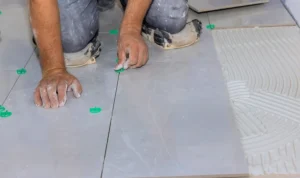
Next, installers apply a waterproof bonding material or thin set mortar designed specifically for pool environments. Tiles are carefully placed according to the layout plan, ensuring consistent spacing and alignment. Precision during this stage impacts both appearance and performance.
Once the tiles are set, grout is applied to fill the joints. Pool grade grout is used because it resists moisture, chemicals, and staining. After curing, the surface is cleaned and inspected for gaps or imperfections.
In many projects, pool tile installation is completed before the final pool surface finish is applied, especially in new pool construction or major renovations.
How Long Pool Tile Installation Takes
The timeline depends on the size of the tiled area, tile type, and whether it is a new pool or a renovation. Waterline tile installation for an existing pool may take a few days, while full decorative tile work can take longer.
Curing time is also important. Mortar and grout must fully set before the pool is filled with water. Rushing this stage can compromise adhesion and shorten the lifespan of the tile work.
Cost Factors to Consider
The cost of pool tile installation varies based on materials, labor, and project complexity. Glass tiles and custom designs typically cost more than standard ceramic tiles. Labor costs may increase for intricate patterns, curved surfaces, or hard to reach areas.
Additional factors include surface preparation, repair work, and grout selection. While tile installation represents a higher upfront investment, it often reduces long term maintenance costs by protecting vulnerable pool surfaces.
Common Mistakes to Avoid
Improper surface preparation is one of the most common issues. Skipping cleaning or leveling steps can lead to tile failure. Using non pool rated adhesives or grout is another mistake that can result in cracking or discoloration.
Poor spacing and uneven alignment affect both appearance and durability. This is why professional installation is strongly recommended, especially for glass or decorative tile projects.
Is Pool Tile Installation Right for Your Pool?
Pool tile installation is ideal for homeowners looking to improve durability, simplify cleaning, and enhance visual appeal. It works well for both new pools and older pools undergoing renovation.
If your pool shows signs of staining, surface wear, or outdated design, tile upgrades can provide a noticeable improvement without requiring full reconstruction.
Final Thoughts
Understanding pool tile installation helps homeowners appreciate its role in both function and design. From protecting the waterline to creating striking visual accents, tile plays a key part in a pool’s long term performance.
When done correctly, pool tile installation adds value, reduces maintenance effort, and improves the overall swimming experience. With the right materials and professional workmanship, it becomes a durable and attractive feature that lasts for many years.
Upgrade Your Pool With Professional Tile Installation
From waterline tile to custom accents, Royal Globe Pool Construction delivers clean, durable pool tile installation that improves both appearance and longevity. If your pool needs new tile or a design refresh, call 1 806-542-3470 to schedule a consultation.